
Sleep apnea is a common sleep disorder that affects millions of people worldwide. It causes repeated interruptions in breathing during sleep, leading to poor sleep quality, daytime fatigue, headaches, and other serious health complications. If left untreated, sleep apnea can increase the risk of heart disease, high blood pressure, diabetes, and stroke.
Fortunately, advancements in medical technology have made sleep apnea treatment more effective and convenient than ever before. Various sleep apnea treatment devices are available today to help patients breathe comfortably and enjoy restful sleep.
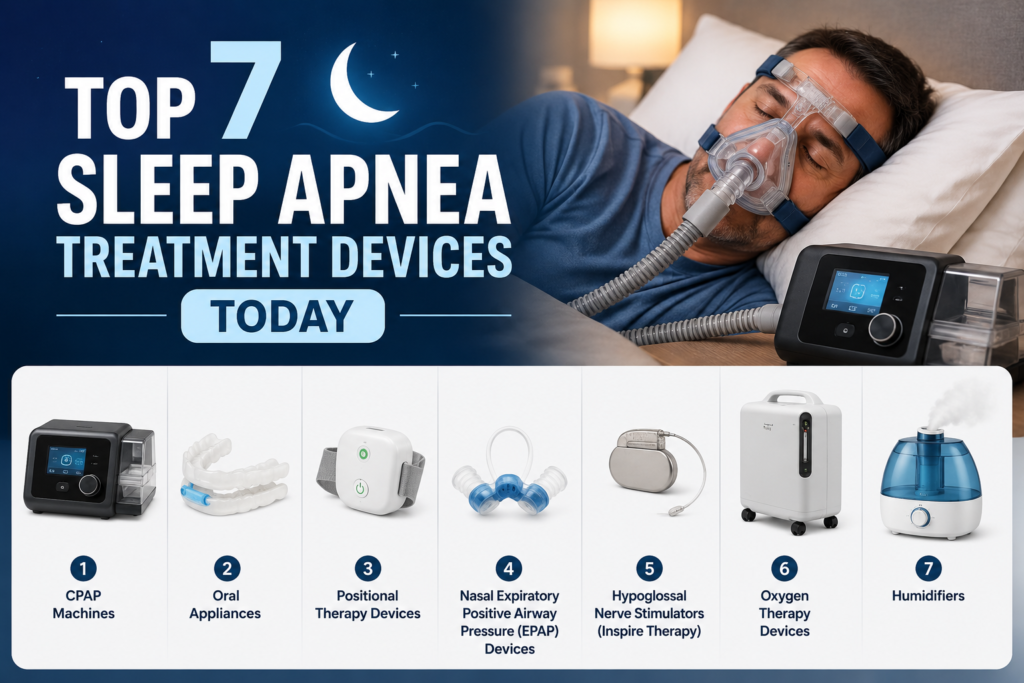
In this article, we will explore the top 7 sleep apnea treatment devices today, their benefits, and how they can improve your overall health and quality of life.
Understanding Sleep Apnea
Before discussing treatment options, it’s important to understand the condition itself.
Sleep apnea occurs when a person’s airway becomes partially or completely blocked during sleep. The most common type is Obstructive Sleep Apnea (OSA), which happens when throat muscles relax excessively. Another type is Central Sleep Apnea (CSA), which occurs when the brain fails to send proper signals to breathing muscles.
Common symptoms include:
Loud snoring
Pauses in breathing during sleep
Morning headaches
Excessive daytime sleepiness
Difficulty concentrating
Irritability and mood changes
Restless sleep
Early diagnosis and treatment can significantly improve symptoms and reduce health risks.
1. CPAP Machine (Continuous Positive Airway Pressure)
The CPAP machine remains the gold standard for treating obstructive sleep apnea.
A CPAP device delivers a continuous stream of pressurized air through a mask worn over the nose or mouth. This airflow keeps the airway open throughout the night, preventing breathing interruptions.
Benefits of CPAP Machines
Highly effective for moderate to severe sleep apnea
Reduces snoring significantly
Improves sleep quality
Enhances daytime alertness
Lowers risk of cardiovascular complications
Ideal For
Patients diagnosed with moderate to severe obstructive sleep apnea who require consistent airway support.
2. BiPAP Machine (Bi-Level Positive Airway Pressure)
A BiPAP machine provides two different pressure levels:
Higher pressure during inhalation
Lower pressure during exhalation
This makes breathing more comfortable for certain patients compared to traditional CPAP therapy.
Benefits of BiPAP Machines
Easier exhalation
Greater comfort for users
Effective for complex sleep apnea cases
Suitable for patients with respiratory conditions
Ideal For
Individuals who struggle with CPAP therapy or require higher airway pressure settings.
3. APAP Machine (Automatic Positive Airway Pressure)
An APAP machine automatically adjusts pressure levels throughout the night based on the user’s breathing patterns.
Unlike CPAP devices that provide fixed pressure, APAP machines continuously monitor airflow and deliver only the pressure needed at a given moment.
Benefits of APAP Machines
Personalized therapy
Improved comfort
Better compliance rates
Reduced pressure-related discomfort
Energy-efficient operation
Ideal For
Patients whose pressure requirements vary during different sleep stages or sleeping positions.
4. Adaptive Servo-Ventilation (ASV) Device
Adaptive Servo-Ventilation (ASV) is an advanced sleep apnea treatment device designed primarily for patients with Central Sleep Apnea (CSA) and complex sleep apnea.
The device continuously monitors breathing patterns and automatically adjusts pressure support to stabilize respiration.
Benefits of ASV Therapy
Effective treatment for central sleep apnea
Real-time pressure adjustments
Improved oxygen delivery
Better sleep quality
Enhanced breathing stability
Ideal For
Individuals diagnosed with central sleep apnea or treatment-emergent sleep apnea.
5. Oral Appliance Therapy Devices
Oral appliances are custom-made devices worn inside the mouth during sleep. They help reposition the jaw and tongue to keep the airway open.
These devices are often recommended for patients with mild to moderate obstructive sleep apnea.
Benefits of Oral Appliances
Compact and portable
Easy to use
No electricity required
Quiet operation
Convenient for travelers
Ideal For
People with mild sleep apnea who cannot tolerate CPAP therapy.
6. Oxygen Concentrators
For certain sleep apnea patients who experience low oxygen levels during sleep, oxygen concentrators may be recommended alongside other therapies.
An oxygen concentrator extracts oxygen from ambient air and delivers concentrated oxygen to the patient through nasal cannulas or masks.
Benefits of Oxygen Concentrators
Improved oxygen saturation
Better breathing support
Enhanced sleep quality
Reduced nighttime oxygen deprivation
Increased comfort and energy levels
Types of Oxygen Concentrators
Portable Oxygen Concentrators
Lightweight design
Easy mobility
Travel-friendly
Stationary Oxygen Concentrators
Higher oxygen output
Suitable for home use
Continuous oxygen delivery
Ideal For
Patients with sleep apnea combined with COPD, respiratory disorders, or chronic oxygen deficiency.
7. Sleep Apnea Masks and Accessories
While not standalone treatment devices, masks and accessories play a critical role in successful sleep apnea therapy.
A poorly fitted mask can reduce treatment effectiveness and cause discomfort.
Common Types of Sleep Apnea Masks
Nasal Masks
Cover the nose only and are suitable for many CPAP users.
Full Face Masks
Cover both nose and mouth and are ideal for mouth breathers.
Nasal Pillow Masks
Provide minimal contact and are preferred by users seeking greater comfort.
Benefits
Improved therapy effectiveness
Better comfort
Reduced air leakage
Enhanced compliance with treatment
Ideal For
All users undergoing CPAP, BiPAP, APAP, or ASV therapy.
How to Choose the Right Sleep Apnea Treatment Device
Selecting the right device depends on several factors:
Severity of Sleep Apnea
Mild cases may benefit from oral appliances.
Moderate to severe cases often require CPAP or BiPAP therapy.
Comfort Requirements
Patients should choose devices that provide maximum comfort to ensure long-term compliance.
Lifestyle Considerations
Travelers may prefer portable solutions such as compact CPAP machines or oral appliances.
Medical Conditions
Individuals with COPD, central sleep apnea, or respiratory disorders may require specialized devices such as BiPAP, ASV, or oxygen concentrators.
Professional Evaluation
Always consult a sleep specialist before selecting any treatment device. A sleep study helps determine the most effective therapy option.
Benefits of Using Sleep Apnea Treatment Devices
Consistent use of sleep apnea treatment devices can provide significant health benefits:
Improved sleep quality
Reduced snoring
Increased daytime energy
Better concentration and productivity
Improved cardiovascular health
Reduced risk of stroke and hypertension
Enhanced mood and mental well-being
Better overall quality of life
Many patients notice improvements within just a few weeks of starting therapy.
Conclusion
Sleep apnea is a serious medical condition that should never be ignored. Thankfully, modern sleep apnea treatment devices offer effective solutions for managing symptoms and improving overall health.
From CPAP and BiPAP machines to APAP devices, ASV therapy, oral appliances, oxygen concentrators, and specialized masks, there are multiple options available to meet different patient needs.
The key to successful treatment is obtaining a proper diagnosis and choosing the right device under the guidance of a healthcare professional. With the appropriate therapy, patients can enjoy restful sleep, improved energy levels, and a healthier future.
If you are looking for reliable sleep apnea treatment solutions, consult a trusted healthcare provider to determine the best device for your condition and lifestyle