
Breathing difficulties can significantly impact a person’s quality of life, sleep quality, and overall health. Individuals suffering from respiratory disorders such as sleep apnea, chronic obstructive pulmonary disease (COPD), obesity hypoventilation syndrome, and other breathing-related conditions often require specialized respiratory support to maintain healthy oxygen and carbon dioxide levels.
One of the most effective non-invasive respiratory support options available today is BiPAP therapy. BiPAP, which stands for Bilevel Positive Airway Pressure, is designed to assist patients with breathing by delivering two different levels of air pressure during inhalation and exhalation.
Over the years, BiPAP therapy solutions have become increasingly popular because they offer superior comfort and effective respiratory support for patients who struggle with traditional breathing therapies. Whether used at home, in hospitals, or during long-term respiratory care, BiPAP therapy can significantly improve patient outcomes and daily living.
In this article, we explore the Top 5 Advantages of BiPAP Therapy Solutions and explain why healthcare professionals frequently recommend them for respiratory care.
What Is BiPAP Therapy?
Before discussing the benefits, it is important to understand how BiPAP therapy works.
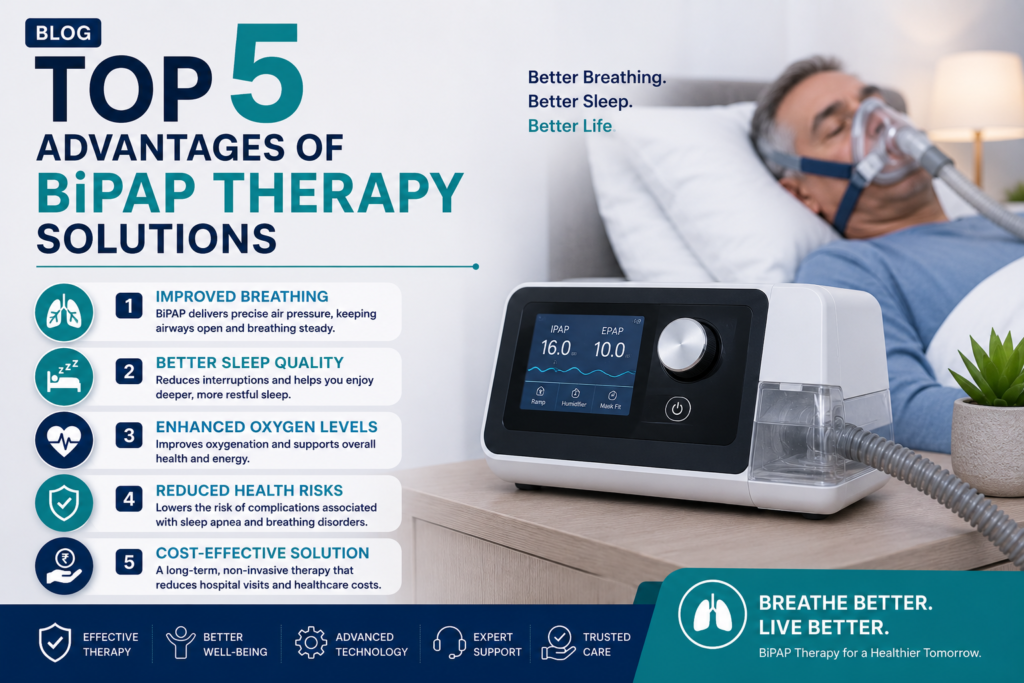
A BiPAP machine delivers pressurized air through a mask worn over the nose, mouth, or both. Unlike a CPAP machine, which provides a single continuous pressure level, a BiPAP machine offers:
- IPAP (Inspiratory Positive Airway Pressure): Higher pressure during inhalation.
- EPAP (Expiratory Positive Airway Pressure): Lower pressure during exhalation.
This dual-pressure system makes breathing more natural and comfortable, especially for patients who require higher levels of respiratory support.
1. Enhanced Breathing Comfort
One of the biggest advantages of BiPAP therapy solutions is the improved comfort they provide during breathing.
Many patients find it challenging to exhale against the constant pressure delivered by traditional CPAP machines. BiPAP technology solves this issue by lowering pressure during exhalation while maintaining adequate support during inhalation.
How BiPAP Improves Comfort
- Easier inhalation and exhalation
- Reduced breathing effort
- Less airway resistance
- More natural breathing patterns
- Better therapy tolerance
Patients who struggle with CPAP therapy often transition successfully to BiPAP because of the increased comfort level.
Why Comfort Matters
Comfort plays a crucial role in therapy compliance. The more comfortable a patient feels using the device, the more likely they are to continue treatment consistently and achieve better health outcomes.
2. Improved Sleep Quality
Poor sleep is one of the most common symptoms associated with respiratory disorders. Frequent breathing interruptions can prevent patients from reaching deep, restorative stages of sleep.
BiPAP therapy helps maintain consistent airflow throughout the night, reducing breathing disturbances and improving sleep quality.
Benefits for Sleep
- Fewer nighttime awakenings
- Reduced sleep disruptions
- Better oxygen delivery
- Improved breathing stability
- More restorative sleep cycles
Patients often report waking up feeling refreshed and energized after beginning BiPAP therapy.
Impact on Daily Life
Improved sleep can lead to:
- Better concentration
- Increased productivity
- Enhanced mood
- Reduced daytime fatigue
- Improved mental performance
Quality sleep is essential for both physical and emotional well-being.
3. Effective Support for Multiple Respiratory Conditions
BiPAP therapy is highly versatile and can be used to manage a wide range of respiratory disorders.
Unlike some therapies that are limited to specific conditions, BiPAP solutions are frequently recommended for patients with various breathing challenges.
Conditions Commonly Treated with BiPAP
Obstructive Sleep Apnea (OSA)
BiPAP helps keep airways open during sleep, reducing apnea episodes and improving oxygen flow.
Chronic Obstructive Pulmonary Disease (COPD)
Patients with COPD often experience difficulty breathing and retaining carbon dioxide. BiPAP therapy supports ventilation and reduces respiratory strain.
Obesity Hypoventilation Syndrome
BiPAP assists patients who have trouble maintaining adequate ventilation due to obesity-related breathing difficulties.
Neuromuscular Disorders
Individuals with weakened respiratory muscles can benefit from BiPAP support during sleep and daily activities.
Central Sleep Apnea
In certain cases, BiPAP devices can help stabilize breathing patterns and improve respiratory function.
Broad Clinical Benefits
Because of its versatility, BiPAP therapy is widely used in hospitals, sleep clinics, and home healthcare settings.
4. Reduced Workload on Respiratory Muscles
Breathing may seem effortless for healthy individuals, but for patients with respiratory disorders, every breath can require significant effort.
BiPAP therapy helps reduce the workload on respiratory muscles by assisting both inhalation and exhalation.
How BiPAP Supports Breathing
The higher inspiratory pressure helps patients draw air into their lungs more effectively, while the lower expiratory pressure allows easier exhalation.
Benefits of Reduced Respiratory Effort
- Less breathing fatigue
- Improved lung ventilation
- Better carbon dioxide removal
- Increased oxygen intake
- Enhanced respiratory efficiency
For patients with chronic respiratory diseases, reducing breathing effort can significantly improve comfort and endurance throughout the day.
Long-Term Health Advantages
Consistent respiratory support may help reduce hospital admissions and improve long-term disease management when used as prescribed by healthcare professionals.
5. Improved Overall Quality of Life
Perhaps the most significant advantage of BiPAP therapy solutions is the positive impact they have on overall quality of life.
By improving breathing, sleep quality, and oxygen delivery, BiPAP therapy enables patients to engage more fully in daily activities and enjoy greater independence.
Quality-of-Life Improvements
Patients often experience:
- Increased energy levels
- Better physical activity tolerance
- Improved emotional well-being
- Enhanced social interactions
- Greater independence
- Reduced daytime sleepiness
Benefits for Family Members
BiPAP therapy can also improve the quality of life for caregivers and family members by reducing nighttime disturbances and supporting better health outcomes for loved ones.
Confidence and Peace of Mind
Knowing that breathing is being properly supported can provide reassurance and confidence, especially for individuals managing chronic respiratory conditions.
Who Can Benefit From BiPAP Therapy?
BiPAP therapy may be recommended for individuals who:
- Have moderate to severe sleep apnea
- Cannot tolerate CPAP therapy
- Have COPD or chronic lung disease
- Experience respiratory muscle weakness
- Require non-invasive ventilation support
- Suffer from obesity hypoventilation syndrome
A healthcare provider or sleep specialist can determine whether BiPAP therapy is the right treatment option based on a patient’s medical history and diagnostic testing.
Tips for Successful BiPAP Therapy
To maximize the benefits of treatment, patients should follow several best practices.
Choose the Right Mask
Proper mask fit helps prevent air leaks and improves comfort.
Use the Device Consistently
Regular use is essential for achieving long-term therapeutic benefits.
Maintain Equipment Properly
Clean masks, tubing, and filters according to manufacturer recommendations.
Attend Follow-Up Appointments
Regular evaluations help ensure optimal pressure settings and treatment effectiveness.
Monitor Symptoms
Report any discomfort, mask issues, or breathing concerns to a healthcare professional promptly.
Why Home BiPAP Therapy Is Becoming More Popular
Advancements in medical technology have made modern BiPAP devices quieter, more portable, and easier to use.
Today’s BiPAP therapy solutions often include:
- Automatic pressure adjustments
- User-friendly displays
- Humidification systems
- Data tracking features
- Compact and travel-friendly designs
These innovations make home respiratory care more convenient and accessible than ever before.
Conclusion
BiPAP therapy solutions have transformed respiratory care by providing comfortable, effective, and non-invasive breathing support for patients with various respiratory conditions.
From enhanced breathing comfort and improved sleep quality to reduced respiratory effort and better overall health, the benefits of BiPAP therapy are substantial. Patients struggling with sleep apnea, COPD, obesity hypoventilation syndrome, and other respiratory disorders can experience meaningful improvements in both physical health and daily living.
If you or a loved one are experiencing breathing difficulties, consulting a healthcare professional about BiPAP therapy may be an important step toward achieving better respiratory health and an improved quality of life.